


As you step through the Imperial Gate of Topkapi Palace, the energetic rhythm of modern Istanbul gradually fades away, replaced by the quiet whispers of centuries past. High above the Golden Horn and the Bosphorus, this vast palace complex served as the heart of the Ottoman Empire for over four hundred years. Yet among all its sunlit courtyards, treasury chambers, and grand council halls, no place holds as much mystery and fascination as the Imperial Harem.
For generations, Western travelers and popular lore painted the Harem as a secluded world shrouded in romantic fantasy. However, the reality of this sacred royal sanctuary was far more complex, intellectually vibrant, and culturally magnificent. It was a self-contained world governed by strict protocol, high education, artistic devotion, and formidable political power. If you listen closely as you wander beneath its domed ceilings and vaulted archways, the quiet marble halls begin to reveal the captivating stories of the influential sultanas who shaped an empire from within.
Beyond the Courtyard: The True Legacy of Sultanas
To understand the Imperial Harem, you must first dispel the historical misconceptions surrounding its inhabitants. The word harem originates from the Arabic term for "sacred" or "forbidden," designating the private living quarters of the Sultan's family where unauthorized entry was strictly prohibited. Far from being merely a sanctuary of leisure, the Harem operated as a highly disciplined royal academy and the administrative heart of the imperial household.
At the apex of this structured hierarchy stood the Valide Sultan, the Queen Mother. As the head of the royal household and the most influential female figure in the empire, she managed substantial personal wealth, directed networks of state officials, and exercised immense political authority. During the sixteenth and seventeenth centuries—a period dynamic historians refer to as the "Sultanate of Women"—sultanas such as Hürrem Sultan, Nurbanu Sultan, Safiye Sultan, and Kösem Sultan played crucial roles in imperial governance.
These remarkable women navigated statecraft, foreign diplomacy, and dynastic continuity with extraordinary skill. When military campaigns took sultans far from the capital, powerful sultanas corresponded directly with European monarchs, Venetian ambassadors, and grand viziers. Their influence extended far beyond the palace walls; they funded the construction of magnificent mosques, hospitals, public baths, and charitable kitchens across the city. Their legacy was defined by far-reaching philanthropy, political vision, and artistic patronage.
Architectural Marvels of the Imperial Harem
Walking through the Harem today offers an unforgettable visual and sensory journey. The architectural path leads you through hundreds of interconnected chambers, open-air courtyards, marble baths, and grand private suites, each reflecting the artistic evolution of the Ottoman Empire across different eras.
As you move from the Courtyard of the Queen Mother to the Privy Chamber of Murad III—masterfully designed by the legendary imperial architect Mimar Sinan—you are surrounded by unparalleled craftsmanship. Intricate Iznik ceramic tiles in luminous shades of cobalt blue, turquoise, and coral red cover the walls with elaborate floral motifs. Soft light filters through stained glass windows, casting warm, jewel-toned reflections across gilded inscriptions and hand-carved wooden doors inlaid with mother-of-pearl.
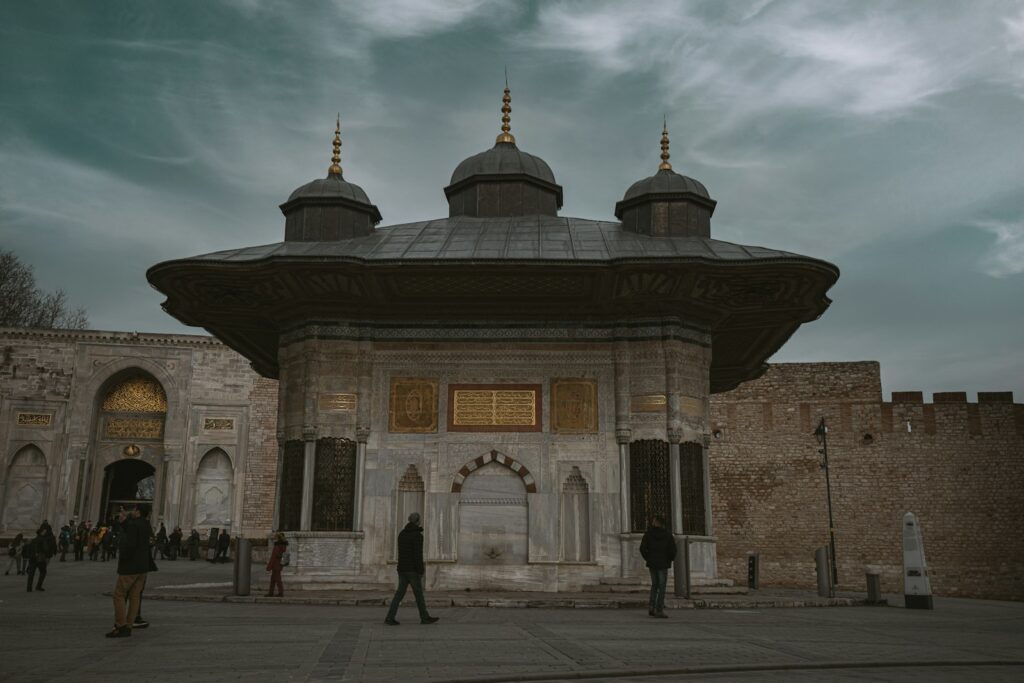
Every corridor carries a functional purpose tied to imperial life. Water fountains were strategically placed throughout the chambers, not only for their soothing acoustic ambiance and cooling marble beauty, but also to ensure privacy by masking sensitive political conversations. Just outside the outer palace walls, this royal decorative splendor connects with the public realm, as seen in the nearby Fountain of Sultan Ahmed III, which showcases the elaborate artistic tastes of eighteenth-century court architects.
As centuries passed and royal preferences evolved toward European architectural styles, the imperial court eventually shifted its primary residence to grand waterfront structures like Dolmabahçe Palace. Yet, the Topkapi Harem remains the unmatched historic heart of Ottoman royal domestic life.
Daily Rituals, Art, and Diplomacy Behind Palace Walls
Life within the Harem was defined by continuous learning, artistic discipline, and refined social etiquette. Young women entering the imperial residence received a thorough education in literature, foreign languages, calligraphy, music, embroidery, and court protocol. The Harem functioned effectively as a prestigious academy, preparing its residents for significant roles within royal society.
Mornings were dedicated to structured study, textile work, and administrative duties, while afternoons often featured poetry recitals, musical performances, and intellectual gatherings. Sultanas were avid collectors of fine arts and textiles, frequently commissioning unique works from imperial artisan workshops. Through their personal funds and religious endowments, they maintained extensive trade connections, ordering fine silks from Bursa and rare spices from regional trade routes.
When you spend a day tracing these historic pathways, taking time to savor the historic peninsula's rich culinary traditions completes your journey. After exploring the grand palace quarters, you can enjoy a memorable dining experience at Olive Anatolian Restaurant. Offering refined Anatolian cuisine with fresh local ingredients—including delicious vegan and vegetarian options—it provides a sophisticated culinary retreat with sweeping views over historic Sultanahmet.
Retreating to Comfort After Your Historic Exploration
Stepping out of the gates of Topkapi Palace and back onto the charming cobblestone streets of Sultanahmet, you carry with you a deeper appreciation for the historic women who directed history from the shadows of the court. Continuing this immersive cultural voyage requires a sanctuary that honors the exact same elegance, warmth, and historical storytelling.
Hotel Sultania was designed to pay homage to this regal tradition. Inspired by the strength, beauty, and intellect of imperial sultanas, the hotel brings history to life through hand-crafted interiors, rich fabrics, and personalized boutique hospitality. Each room and suite pays tribute to an iconic historical sultana, seamlessly blending traditional Ottoman motifs with sophisticated modern luxury.
Whether you are traveling as a couple seeking a romantic cultural getaway or as a family looking to immerse yourselves in ancient history, you can explore our regal room options to find the ideal accommodations for your stay. Staying in the heart of the historic peninsula allows you to live the legacy of Istanbul rather than simply observe it.
The Imperial Harem of Topkapi Palace is far more than a monument of stone and ceramic tile; it is a living testament to the intellect, artistic grace, and political wisdom of Ottoman royal women. As evening settles over Sultanahmet and the calls to prayer echo softly across ancient domes, your time spent exploring their historic domain leaves a lasting imprint on your journey through Istanbul.
Photo: Husien Bisky — Unsplash