


Imagine stepping into a realm where every meal was orchestrated as a grand celebration of culture, influence, and culinary artistry. As you walk through the historic streets of Sultanahmet, the gentle sea breeze carries subtle hints of roasted cumin, sweet mastic, and simmering fruits—aromas that have lingered over the Historic Peninsula for centuries. Long before Istanbul became a modern global metropolis, the Ottoman court transformed the simple act of dining into a sophisticated art form. Imperial banquets were designed not only to satisfy the appetite of sultans and foreign dignitaries, but to tell a story of empire, hospitality, and seasonal harmony.
To truly understand the soul of Turkish gastronomy, you must look back to the grand feasts served within the stone walls of the imperial palace. Here, master chefs from across vast territories gathered to experiment with exotic ingredients, creating recipes that defined fine dining across continents and left an indelible mark on traditional cuisine.
The Imperial Kitchens of Topkapi Palace
At the center of this culinary renaissance stood the Matbah-İ Âmire, the legendary imperial kitchens of Topkapı Palace. Sprawling beneath towering chimneys that still dominate the city skyline, these kitchens were a city within a city. Hundreds of specialized cooks, apprentices, and craftsmen worked in perfect rhythm, organized into distinct guilds. One section prepared delicate breads, another crafted refreshing sherbets, while master cooks labored over royal stew pots and spit-roasted meats.
Dining in the Ottoman palace was governed by intricate etiquette and hierarchy. The quality of ingredients, the complexity of presentation, and the sequence of courses reflected imperial majesty. Fresh produce was brought daily from nearby palace gardens, while rare spices, rice, and dried fruits arrived along ancient trade routes from Egypt, Persia, and the Silk Road. As you explore the grand courtyards of the peninsula today, it is inspiring to imagine how these monumental kitchens turned culinary preparation into an act of statecraft, laying the foundations for classic Anatolian cooking.
A Symphony of Spices and Slow-Cooked Delicacies
What distinct flavors characterized the royal tables of historic Istanbul? The defining secret of the imperial kitchen lay in the harmonious union of sweet and savory elements. Unlike many Western European culinary traditions of the era, Ottoman palace chefs frequently paired slow-cooked meats with sweet dried fruits such as apricots, prunes, figs, and raisins. Pomegranates, sour cherries, and grape molasses were used to impart a delicate acidity, balancing the richness of tender lamb and beef.
Cooking techniques were patient and precise. Meats were gently braised in heavy copper cauldrons over charcoal embers for hours until they rendered effortless tenderness. Fragrant herbs and warm spices—saffron, cinnamon, allspice, sumac, and mastic resin—were added with artistic restraint, ensuring that no single spice overwhelmed the natural flavors of the main ingredients. Rice pilafs were elevated to an art form, cooked with clarified butter, pine nuts, currants, and aromatic broths to achieve pristine texture and fragrance.
For epicurean travelers who wish to bring these ancient traditions home, engaging directly with culinary heritage offers an unforgettable experience. You can step into an authentic kitchen atmosphere by joining a hands-on cooking class in Turkish cuisine, where professional instructors teach you to balance these rich flavor profiles and master classic imperial techniques yourself.
Palace Desserts and the Art of Sherbet
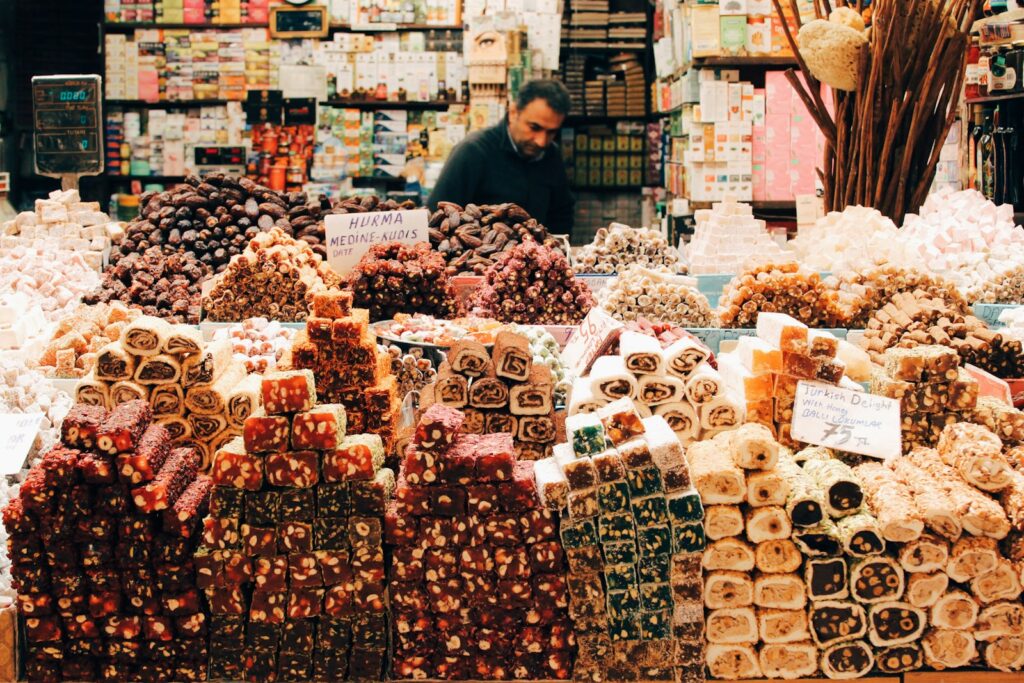
No royal banquet was complete without an elaborate finale of sweet creations and cold beverages. Dessert in the Ottoman palace was considered a divine art, symbolizing prosperity and warm hospitality. Confectioners created paper-thin layers of pastry filled with crushed pistachios and walnuts, giving rise to the refined baklava varieties celebrated today. During special celebrations, milk-based puddings infused with rosewater, mastic, and rice flour were served in delicate porcelain bowls, offering a light and soothing balance after a heavy feast.
Equally central to the banquet experience was the art of the œerbet (sherbet). Crafted from steeped fresh flowers, fruit juices, honey, and herbal infusions like hibiscus, tamarind, and damask rose, these chilled beverages served both as palate cleansers and refreshing digestifs. Served in silver or crystal goblets, sherbets highlighted the seasonal abundance of the empire and showcased the palace’s mastery over flavor infusion long before modern beverage mixology existed.
Mastering Royal Flavors in Historic Sultanahmet
Today, the spirit of Ottoman imperial hospitality lives on in the heart of Istanbul’s historic peninsula. To truly taste history, you do not need to travel back in time—you simply need to sit down at a table that honors these enduring culinary traditions. A journey to Sultanahmet allows food enthusiasts to experience authentic recipes crafted with local ingredients and time-honored techniques.
When seeking an exceptional dining experience that captures this heritage, treat yourself to the exquisite culinary creations at Olive Anatolian Restaurant. Here, traditional palace-inspired recipes are elevated with modern presentation, offering guests a memorable journey through regional Anatolian flavors, complete with thoughtful vegan and vegetarian options for every preference.
Surrounding yourself with this rich history completes the experience. Staying in a boutique sanctuary like Hotel Sultania—where elegant rooms pay tribute to the influential sultanas of the Ottoman era—places you directly within walking distance of the historic sights that shaped this legacy. For families seeking a charming base in the historic quarter, sister property Hotel Yasmak Sultan also provides classic Turkish hospitality near Hagia Sophia and Topkapı Palace.
As you wander through the sunlit avenues and atmospheric quarters of Old Istanbul, every flavor you taste connects you to centuries of imperial tradition. By embracing the spices, slow-cooked delicacies, and timeless hospitality of the Ottoman court, your journey becomes far more than a vacation—it becomes a sensory celebration of history itself.
Photo: Michael Parulava — Unsplash