


A classic marble hamam session in Sultanahmet takes you through a structured four-stage cleansing ritual: thermal acclimation in a heated marble steam room (sıcaklık), deep exfoliation using a coarse silk mitt (kese), an enveloping bubble soap massage (köpük), and a gradual cooling phase with herbal tea. Originating from Roman bath architecture and refined across centuries of Ottoman palace heritage, this traditional treatment cleanses the skin, eases muscular stress, and calms the nervous system through alternating thermal temperatures and physical touch.
Preparing for Your Traditional Bath Session
Preparing for a traditional bath session requires minimal advance planning, as bath attendants supply cotton wraps, natural soaps, and wooden footwear upon your arrival. When you enter a historic bathhouse or spa facility in the Historic Peninsula, you are directed to a private changing cubicle called a camekân. Here, you replace your street clothing with a peştemal—a lightweight, hand-woven cotton cloth tied securely around the waist or chest.
Hydration is an essential preliminary step before entering heated steam environments. Drinking a glass of water five to ten minutes before your treatment helps regulate internal temperatures and supports natural perspiration. Most bath halls require guests to wear anti-slip wooden clogs or rubber slippers, known historically as nalın, to navigate smooth wet marble floors safely. Bringing swim underwear or a dry change of undergarments ensures complete comfort when transitioning back to your post-bath clothes.
Entering the Sıcaklık Hot Room Wrapped in a Peştemal
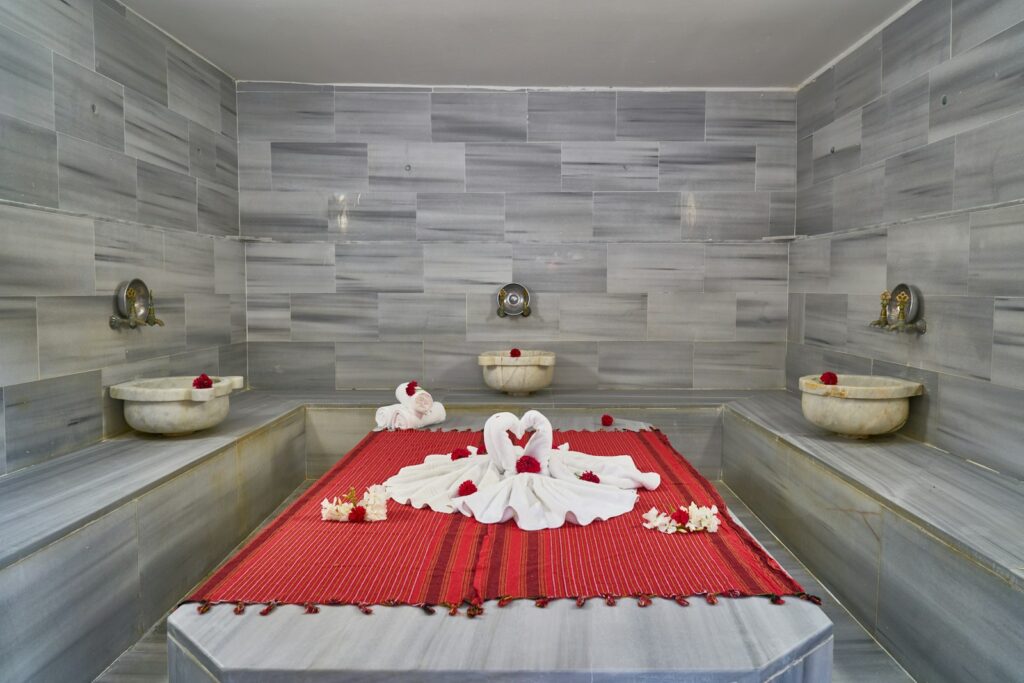
Entering the sıcaklık hot room introduces your skin to warm steam and radiant thermal heat radiating from marble slabs, softening pores before any physical treatment begins. As you step through the heavy wooden door, ambient heat held within thick stone walls elevates your body temperature. The main architectural centerpiece of this room is the göbek taşı—a large, elevated central marble platform heated from beneath by steam flues.
You begin your session by reclining on a clean towel draped across the göbek taşı for fifteen to twenty minutes. Domed ceilings overhead feature thick glass convex lenses called göz, which filter natural daylight into soft, diffused beams across the mist. Around the perimeter wall, individual marble basins named kurna stream continuous hot and cold water. Guests use small brass or copper bowls (tas) to splash warm water over their shoulders, allowing muscles to relax deeply as perspiration draws out impurities, whether visiting a public historical building or using an authentic Turkish bath facility within a boutique hotel setting.
The Kese Scrub and Bubble Soap Massage Process
The kese scrub and bubble soap massage remove dead skin cells through firm, rhythmic strokes with a hand-woven mitt before smothering the body in mountain-herb soap foam. Once your skin has softened on the central marble stone, a trained attendant (known as a tellak for men or a natır for women) approaches with a coarse silk or goat-hair mitt. Without using soap at this initial stage, the attendant applies long, sweeping pressure across your arms, back, legs, and torso, rolling away dead skin layer by layer.
Following the deep exfoliation, the treatment transforms into a soothing foam bath. The attendant dips a perforated cloth bag (köpük torbası) into a bucket of warm water infused with olive oil soap, whips it vigorously to create dense mountains of lather, and squeezes the foam over your body. Enveloped from shoulders to feet in warm bubbles, you receive a deep tissue muscle massage focused on relieving tension in the spine, neck, and shoulders. Warm water poured from copper bowls then rinses away every trace of soap, leaving skin exceptionally smooth and invigorated. For a deeper look at the historical sequence, you can consult our detailed bath guide before your appointment.
In-Room Hamam Marble Basins at Hotel Sultania
In-room hamam basins allow guests to recreate private marble steam rituals directly within their personal bathrooms using carved stone kurna and integrated heated seating. Designed to reflect the opulent privacy of royal Ottoman quarters, such as those historically enjoyed by Hurrem Sultan, these private architectural features combine marble craftsmanship with modern bathing conveniences.
Guests selecting our hamam concept rooms can experience private marble wash basins without leaving their suite, pouring warm water manually with authentic copper bowls while enjoying total personal space. Alternatively, you can choose our spacious Harem Suite option for an authentic regal ambiance featuring custom tilework and spacious bathing areas. As recommended by the Hotel Sultania team, pairing an in-room bath soaking with an official thermal spa ritual yields maximum skin restoration during a multi-day stay in Istanbul. You can review layout specifications across all available room categories to select the ideal bathroom configuration for your trip.
Restoring Hydration with Turkish Tea in the Cool Lounge
Restoring hydration in the cool lounge (soğukluk) allows body temperature and blood pressure to normalize while sipping black tea, herbal infusions, or cold mineral drinks. After rinsing off the final soap lather in the hot room, you are wrapped in fresh, dry cotton towels and guided into a quiet transitional resting lounge shielded from cold drafts.
Resting for twenty to thirty minutes prevents post-bath dizziness and allows natural perspiration to settle. Attendants traditionally serve freshly brewed black tea in tulip-shaped glasses, cold quince or rose sherbet, or chilled mineral water alongside small pieces of Turkish delight. This quiet cooling period gives your heart rate time to stabilize and ensures your skin absorbs residual moisture before you step back outside into the city streets.
| Bath Stage | Setting & Temperature | Primary Activity | Key Items Used |
|---|---|---|---|
| 1. Thermal Warming | Sıcaklık (Hot Room, 38°C–45°C) | Sweating on central marble stone (Göbek Taşı) | Cotton Peştemal wrap, Wooden Nalın slippers |
| 2. Exfoliation | Sıcaklık (Hot Room) | Vigorous body scrub along muscle lines | Coarse silk or goat-hair Kese mitt |
| 3. Foam Massage | Sıcaklık (Hot Room) | Lather coverage and deep muscle massage | Olive oil soap, Köpük Torbası bag, Copper Tas bowl |
| 4. Cool Down | Soğukluk (Cool Lounge, 20°C–24°C) | Hydration, temperature normalization, rest | Dry cotton towels, Turkish tea, fruit sherbet |
Combining Bathing with Historic Peninsula Exploration
Combining a bath session with sightseeing works best when scheduled after walking through monuments like Hagia Sophia, Topkapi Palace, or the Grand Bazaar to soothe tired limbs. Sultanahmet Old Town is best navigated on foot, with major sights concentrated within short walking distances along cobblestone avenues.
A typical morning itinerary begins with a five-minute stroll from Ebusuud Avenue toward Sultanahmet Square, where Hagia Sophia and the Basilica Cistern sit directly across from one another. After touring Topkapi Palace behind the Gulhane gardens, returning to your hotel for an late afternoon hamam session melts away physical walking fatigue. For dinner or lunch after your session, head to Olive Anatolian Restaurant located nearby in Sirkeci, where local Anatolian recipes and dedicated plant-based menus are served alongside Bosphorus views. Couples planning a romantic getaway or honeymoon can also explore our sister property, Romance Istanbul Hotel, known for specialized couple spa amenities in Old Town.
Understanding the simple sequence of an Ottoman bath turns what might seem like an unfamiliar cultural practice into a deeply relaxing highlight of your Istanbul journey. By taking time to warm your muscles, embrace the cleansing scrub, and rest in the cooling lounge, you connect directly with centuries of imperial wellness traditions right in the heart of Sultanahmet.
Frequently Asked Questions
What takes place during a classic marble hamam session in Sultanahmet?
A classic hamam session involves sitting on a warm marble stone to sweat, undergoing a vigorous body scrub with a silk mitt (kese), enjoying a dense foam soap massage, and concluding with cool tea in a lounge. This ritual relaxes muscles and thoroughly exfoliates skin.
What should I wear inside a Turkish hamam?
Bathers traditionally wrap themselves in a lightweight cotton towel called a peştemal. Most guests wear swimwear or undergarments beneath the peştemal. Slippers are provided by the facility to prevent slipping on wet marble floors.
How long does a standard Turkish bath ritual last?
A full treatment session typically lasts between 45 and 75 minutes. This includes 15 minutes of thermal warming, 20 minutes of scrubbing and foam massage, and extra time for rinsing and cooling down in the lounge.
Can I experience a private hamam in my room at Hotel Sultania?
Yes, Hotel Sultania offers specialized room categories equipped with authentic marble hamam basins and hand-carved stone taps. These private setups allow you to enjoy warm water rinsing and traditional marble bathing in complete privacy.
Is a traditional Turkish bath suitable for sensitive skin?
Yes, but you should inform your bath attendant before the kese scrub begins. Attendants can adjust scrubbing pressure or use gentler natural olive oil soap to protect delicate skin barriers during exfoliation.
How far is Hotel Sultania from major historical sights like Hagia Sophia?
Hotel Sultania is located in Sirkeci/Sultanahmet, situated roughly a five-minute walk from Hagia Sophia, the Basilica Cistern, and Topkapi Palace. Its central location allows guests to walk easily between historic landmarks.
Where can guests dine near Hotel Sultania after a hamam treatment?
Guests can dine at Olive Anatolian Restaurant, located just a short walk away on the rooftop in Sirkeci. The restaurant serves traditional Anatolian dishes alongside dedicated vegan and vegetarian choices with Bosphorus views.
What are the standard check-in and check-out times at Hotel Sultania?
Check-in at Hotel Sultania begins at 14:00, while check-out is available until 12:00. The multi-lingual front desk staff assists guests in English, Turkish, and Russian throughout their stay.
Photo: engin akyurt — Unsplash