


You can experience authentic sand-brewed Turkish coffee and traditional tea service along the historic cobblestone alleys surrounding the Gulhane tram stop, inside centuries-old courtyards near the Grand Bazaar, and on the rooftop terrace at Olive Anatolian Restaurant in Sirkeci. These historic spots offer copper-brewed beverages prepared over hot sand pans or copper double-kettles just a few minutes on foot from major Old Town landmarks.
Understanding the Traditional Copper Cezve Slow Brew Method
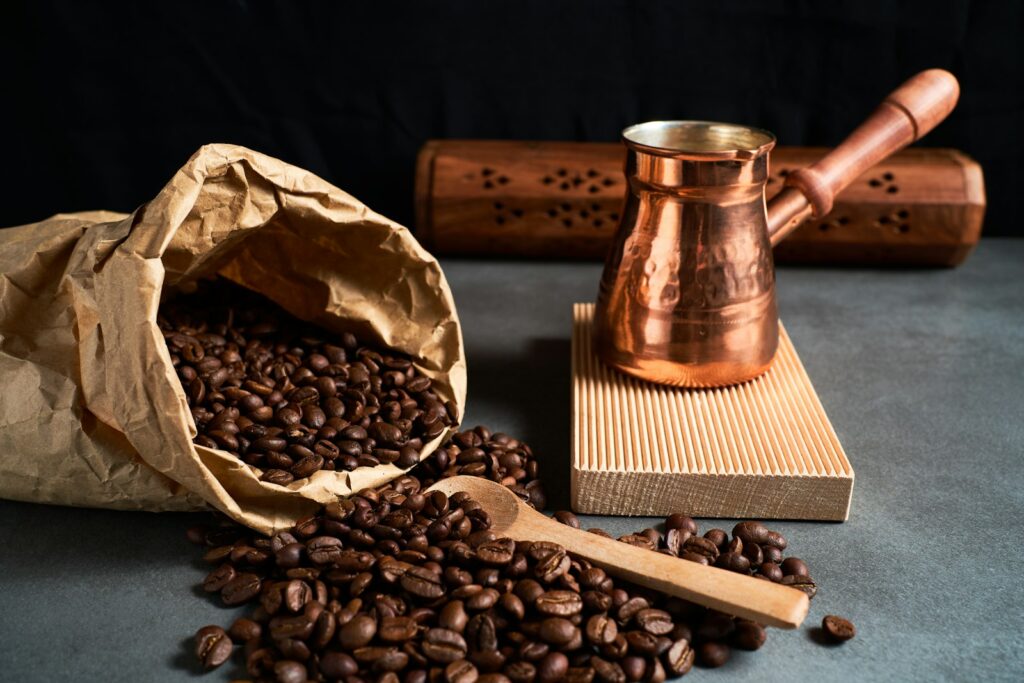
The traditional copper cezve slow brew method uses finely ground Arabica coffee beans cooked gradually over heated sand or embers to produce a dense foam and rich body. Unlike espresso or drip filter methods, Turkish coffee is brewed with unfiltered, extra-finely milled coffee grounds combined directly with cold water inside a forged copper pot known as a cezve. The thick copper walls distribute heat evenly, preventing the delicate oils of the coffee from burning during extraction.
In authentic sand brewing, known locally as kumda kahve, a deep brass pan filled with fine river sand rests over a controlled heating element. The barista buries the copper pot deep into the hot sand, creating uniform heat transfer across the entire vessel. As the water temperature rises toward 70 to 80 degrees Celsius, a dark micro-foam forms on the liquid surface. The baker gently lifts the pot just as the foam rises to the brim, allowing the temperature to drop slightly before dipping it into the sand two or three additional times. This technique amplifies flavor extraction without imparting a bitter, scorched taste.
When served, the barista pours the foam and coffee into small porcelain cups called fincan. A small glass of plain water always accompanies the serving to clear your palate before drinking, alongside a small piece of Turkish delight. You should allow the coffee to sit undisturbed in your cup for two minutes so the finely ground coffee sediment settles completely at the bottom. If you want to learn these heritage culinary techniques yourself, booking a cooking class in Turkish Cuisine gives you hands-on experience with copper brew pots, traditional spice balances, and classic palace recipes.
How to Identify Authentic Sand-Brewed Turkish Coffee
Authentic sand-brewed Turkish coffee is distinguished by a thick layer of velvet-like foam, a balanced roasted aroma without burnt undertones, and a slow-rising foam level achieved through multiple gentle heat dips in hot sand. Commercial electric pots often boil coffee too quickly, producing thin, short-lived bubbles and a bitter, acidic profile. In contrast, genuine sand brewing relies on constant thermal control, taking roughly three to five minutes per batch.
When ordering coffee in Old Town Istanbul, you must specify your preferred sugar level before the brewing process begins, as sugar is never added to the cup after serving. The four standard sweetness levels are:
- Sade: Completely plain coffee with no sugar added.
- Az Şekerli: Slightly sweet, prepared with approximately half a sugar cube per cup.
- Orta: Medium sweet, prepared with one sugar cube per cup.
- Şekerli: Sweet, prepared with two sugar cubes per cup.
The sugar dissolves into the cold water along with the coffee grounds inside the copper pot before heat is applied. This ensures even caramelization and prevents disturbing the thick foam mantle during drinking. The high density of the brew retains heat inside the porcelain cup for a extended period, allowing you to sip slowly while observing the bustling street life of Sirkeci.
Historic Coffee Courtyards Near Gulhane Tram Stop
The historic courtyards located within a five-minute walk of the Gulhane tram stop provide atmospheric settings to sample traditional Turkish tea and coffee cooked over coals or hot sand. Stepping off the tram onto Alemdar Avenue, you are surrounded by stone structures built during the reign of the Ottoman Empire. Many former medreses (theological schools) and caravanserai complexes now operate as open-air teahouses where copper kettles simmer throughout the day.
One notable site is the Çorlulu Ali Paşa Medresesi, constructed in the early 18th century, situated a short walk up the hill toward Sultanahmet Square and Beyazıt. Its open stone courtyard features central fountain basins, low wooden benches covered with kilim rugs, and shaded arcades where light filters through vine-draped trellises. Here, brass trays carrying tulip-shaped glasses and smoking sand-coffee pots move steadily between tables, surrounded by the quiet sound of backgammon dice hitting wooden boards.
Staying near these cultural corridors makes morning and evening strolls effortless. Guests staying in a Deluxe Double With Sofa at Hotel Sultania are located just three minutes on foot from Ebusuud Street and the Gulhane park gates, placing heritage coffee houses and historic monuments right at your doorstep.
Evening Rooftop Tea Pairings at Olive Anatolian Restaurant
Evening rooftop tea service at Olive Anatolian Restaurant pairs small-batch Anatolian herbal infusions and black tea with panoramic skyline views of the Bosphorus and the illuminated domes of Old Town Istanbul. Situated on the top floor of the hotel group’s Sirkeci property, this dining venue provides direct line-of-sight views toward Hagia Sophia and Topkapi Palace while serving refined regional cuisine.
Traditional Turkish black tea, harvested mainly along the rainy green slopes of Rize on the Black Sea coast, is brewed using a two-tier kettle system called a çaydanlık. Water boils in the larger bottom pot, while loose black tea leaves steep in a concentrated infusion in the smaller top pot. When served, the tea master pours a portion of concentrated tea into a clear glass, diluting it with boiling water from the lower kettle to achieve your preferred strength—either strong (demli) or light (açık).
At the rooftop dining room (which can also be explored at oliverestaurant.com), tea service is paired with authentic Anatolian desserts. You can choose from flaky pistachio baklava made with paper-thin pastry layers, or plant-based options like roasted pumpkin marinated in grape molasses and served with crushed walnuts and tahini. As noted by the Hotel Sultania team, pairing an herbal rosehip or wild sage tea with a plant-based dessert on the outdoor terrace provides an ideal cultural conclusion to a day of sightseeing.
Traditional Tea Culture and Tea-Time Etiquette in Old Town Istanbul
Traditional tea culture in Istanbul relies on loose-leaf Black Sea tea served scalding hot in clear, waist-narrow tulip glasses that showcase the deep ruby color of the brew. Known locally as ince belli (thin-waisted), the glass design is functional: the narrow middle retains heat in the lower portion while allowing the upper rim to cool slightly so you can handle it comfortably without a handle.
To drink tea according to local customs, balance the glass on its small decorative porcelain saucer. Hold the upper rim of the glass using your thumb and index finger, resting the base gently on your fingers if needed. Two small sugar cubes usually rest on the saucer alongside a tiny brass spoon. Stir gently to dissolve the sugar, placing the spoon back on the saucer before sipping.
Beyond traditional black tea, local tea gardens and herbal shops across the Historic Peninsula offer distinct regional infusions:
- Adaçayı (Sage Tea): Steeped from dried whole sage leaves gathered from coastal Mediterranean cliffs, offered with a slice of fresh lemon.
- Ihlamur (Linden Flower Tea): A gentle floral brew made from dried linden blossoms and leaves, frequently sweetened with local floral honey.
- Kuşburnu (Rosehip Tea): A tart, crimson-colored infusion high in natural vitamin C, served hot during cooler autumn and winter afternoons.
- Elma Çayı (Apple Tea): A sweet, fruit-forward brew prepared from dried apple bits and cinnamon bark, popular in historic bazaars.
Comparing Traditional Turkish Hot Beverages in Old Town
To help you navigate beverage menus during your exploration of Sirkeci and Sultanahmet, the table below compares the preparation, taste profiles, and customary settings for classic Turkish hot drinks.
| Beverage Type | Brew Technique | Serving Style | Flavor Profile & Dietary Notes |
|---|---|---|---|
| Sand-Brewed Coffee (Kumda Kahve) | Extra-fine grounds simmered slowly in a copper pot buried in hot river sand | Small porcelain cup (fincan) with water & Turkish delight | Rich, dark, micro-foamy; inherently vegan and gluten-free |
| Black Tea (Rize Çayı) | Steeped in a two-tiered copper or steel kettle (çaydanlık) | Clear tulip glass (ince belli) on small saucer | Bold, astringent, deep ruby red; plain herbal brew |
| Wild Sage Tea (Adaçayı) | Whole dried sage leaves steeped in boiling water | Glass mug or tulip glass with fresh lemon slice | Earthy, aromatic, herbal; natural caffeine-free option |
| Ottoman Linden Brew (Ihlamur) | Linden blossoms boiled gently with cloves and lemon peel | Porcelain cup or clear glass, optional honey | Floral, soothing, sweet fragrance; naturally plant-based |
Planning Your Beverage Discovery Walk Through Sultanahmet and Sirkeci
A self-guided walking itinerary starting at Sirkeci, passing through Gulhane Park, and ending near Sultanahmet Square allows you to sample sand-brewed coffee and traditional tea within a concentrated one-kilometer radius. Start your morning along Ebusuud Street, where quiet bakeries serve fresh simit (sesame-crusted bread rings) alongside hot black tea.
- Start at Sirkeci: Begin at Ebusuud Street and walk two minutes east to the main stone entrance gates of Gulhane Park.
- Park Promenade: Stroll beneath the tall plane trees of the former outer gardens of Topkapi Palace. Stop at the outer teahouse overlooking the mouth of the Bosphorus for a morning glass of black tea.
- Ascend Alemdar Avenue: Exit toward the southern park gate and walk three minutes uphill toward Hagia Sophia and the Basilica Cistern.
- Courtyard Coffee Stop: Turn onto the historic side streets near the Hippodrome of Constantinople or Çorlulu Ali Paşa Medresesi to observe a sand-coffee master at work and order an afternoon coffee.
- Rooftop Evening: Walk back downhill toward Sirkeci (about five minutes on foot) to finish your route at Olive Anatolian Restaurant for an evening herbal tea pairing overlooking the city lights.
For travelers planning a broader cultural itinerary across the Historic Peninsula, staying at sister property Hotel Yasmak Sultan provides another convenient base in Sirkeci within easy walking distance of these historic routes. Whether you are exploring ancient bazaars or enjoying a quiet tea ritual, Old Town Istanbul offers deep culinary traditions in every neighborhood corner.
Frequently Asked Questions
Where can I try authentic sand-brewed Turkish coffee near Sirkeci and Sultanahmet?
You can sample authentic sand-brewed Turkish coffee at historic courtyard teahouses along Alemdar Avenue near the Gulhane tram stop, inside Çorlulu Ali Paşa Medresesi, and at specialty cafes surrounding the Spice Bazaar. These locations cook coffee in copper pots buried in hot sand pans just minutes on foot from Hotel Sultania.
What is the difference between sand-brewed coffee and machine-brewed Turkish coffee?
Sand-brewed coffee cooks gradually over uniform heat inside a deep pan of river sand kept at high temperatures. This slow process allows deep extraction, creates a dense micro-foam, and prevents scorching, whereas electric quick-boil machines often produce thinner foam and an acidic taste profile.
Is sugar added before or after brewing Turkish coffee?
Sugar is always added to cold water along with the grounds before brewing starts inside the copper pot. You must state your preferred sweetness—plain (sade), medium (orta), or sweet (şekerli)—when ordering, as adding sugar after serving destroys the delicate foam mantle on top.
Where can I find rooftop tea service with Bosphorus views in Sirkeci?
Olive Anatolian Restaurant in Sirkeci provides evening rooftop tea service featuring regional Anatolian herbal teas and traditional Black Sea black tea. Guests enjoy skyline views of the Bosphorus, Hagia Sophia, and Topkapi Palace alongside plant-based and traditional Anatolian desserts.
Are there vegan dessert options to pair with tea in Old Town Istanbul?
Yes, many traditional sweets paired with tea are naturally vegan, including roasted pumpkin with tahini and crushed walnuts, regional grape molasses sweets, and plain Turkish delight. Olive Anatolian Restaurant in Sirkeci clearly lists dedicated vegan and vegetarian dessert options on its menu.
How far is Hagia Sophia from the teahouses near Gulhane tram stop?
Hagia Sophia is located approximately a five-minute walk up Alemdar Avenue from the Gulhane tram stop. The route passes directly by historic stone courtyards, quiet teahouses, and the entrance to Topkapi Palace grounds.
What are the standard check-in and check-out times at Hotel Sultania?
Check-in at Hotel Sultania starts from 14:00, and check-out is available until 12:00 noon. The front desk operates 24 hours a day in English, Turkish, and Russian to assist arriving guests with luggage storage and transfer details.
How should you hold a traditional Turkish tea glass without burning your fingers?
You should hold a traditional tulip-shaped glass (ince belli) by pinching the silver or rim edge at the top using your thumb and index finger. The narrow waist of the glass keeps the hot liquid below while allowing the upper rim to cool safely for handling.
Photo: Ricardo Díaz — Unsplash