


Essential Basilica Cistern visiting tips center on booking digital entry tickets online, arriving at opening near Yerebatan Street to bypass morning queues, and wearing non-slip shoes for damp wooden walkways. Located roughly five minutes on foot from Hotel Sultania, this 6th-century subterranean reservoir holds 336 marble columns across 9,800 square meters of underground historical engineering.
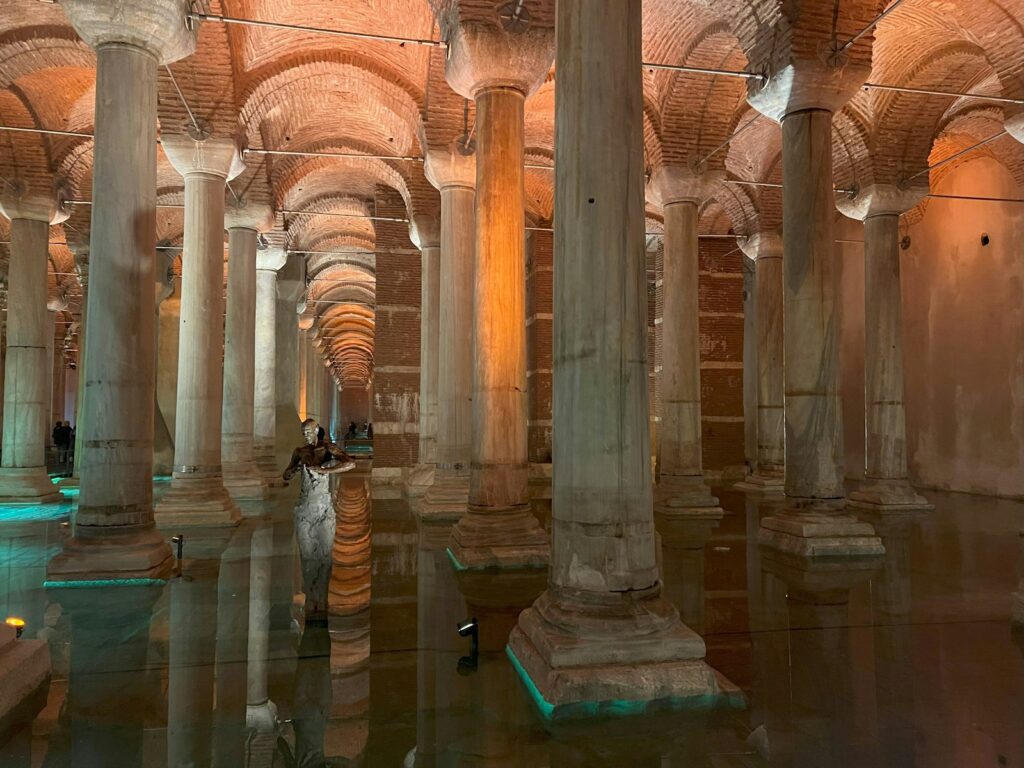
Optimal morning entry times near Yerebatan Street
The best time to enter the Basilica Cistern is during the first opening hour in the morning, right as gates open along Yerebatan Street. Positioned just off Sultanahmet Square, the main visitor entrance sits on Yerebatan Street directly across from the ancient Million Stone landmark. Arriving between 09:00 and 10:00 allows you to clear the security checkpoint quickly before tour group buses begin arriving at the historic site.
During peak tourism seasons from April to October, ticket line wait times for non-ticket holders can extend significantly. Booking digital entrance tickets online prior to your morning walk allows you to skip the regular ticket window line and head straight to security screening. Planning your day after checking breakfast serving times at your accommodation ensures a smooth start before the surrounding streets grow crowded.
Locating the inverted Medusa bases in the northwest corner
You can find the two legendary Medusa heads supporting columns in the far northwest corner of the Basilica Cistern reservoir. To reach these carved marble blocks, follow the elevated pedestrian walkway through the interior grid of 336 marble columns. The reservoir measures 140 meters in length by 70 meters in width, organized in 12 structured rows of 28 columns spaced 4.8 meters apart.
As you reach the northwest perimeter wall, the walkway brings you directly above two distinct column bases carved into the likeness of Medusa from Greek mythology. One Medusa block rests completely on its side, while the second block sits upside down directly beneath an Ionic column shaft. Byzantine imperial builders imported these large stone blocks from ancient Roman structures, repurposing them as durable structural pedestals for the water retention reservoir. Positioning the heads sideways and upside down neutralized pagan fears of Medusa turning observers to stone while providing exact physical support for the ceiling vaults above.
Elevated wooden pathways and interior lighting conditions
Navigating the subterranean hall requires walking along raised wooden boardwalks designed to protect the water retention structure while providing slip-resistant footing. Constant humidity underground causes light condensation on the brick vaulting overhead, occasionally dripping onto the walkway surface. Sturdy handrails frame the full pedestrian path, keeping visitors safely elevated above the shallow water where carp swim around the marble column bases.
Modern lighting updates have replaced bright white halogen bulbs with ambient, color-changing LED illumination designed to accentuate the architectural silhouettes. Soft red, amber, and deep blue lights shift across the stone surfaces, reflecting over the quiet water below. Because interior lighting is kept intentionally dim to protect ancient masonry, maintain a slow pace and hold handrails when walking across damp areas. Underground temperature stays near 12 to 15 degrees Celsius year-round, so bringing a light layer of clothing keeps you comfortable during your 45-minute walkthrough.
Practical steps to combine nearby historical monuments
Combining your subterranean tour with Hagia Sophia, the Basilica Cistern, and the Hippodrome forms an efficient morning walking circuit across Sultanahmet Square. Navigating these landmark sights sequentially saves time and minimizes walking back across the historic quarter:
- Begin your morning at the Basilica Cistern entry on Yerebatan Street right at opening time to complete your walk in quiet surroundings.
- Walk two minutes south across the tram lines to view the Million Stone and the granite Obelisk of Theodosius along the Hippodrome track.
- Cross Sultanahmet Square east toward the main complex, making sure you know how to respectfully visit Hagia Sophia in accordance with modest dress standards and entry regulations.
- Walk three minutes north toward Topkapi Palace outer gates to explore the imperial courtyards overlooking the Bosphorus.
Staying nearby on the Historic Peninsula makes walking between monuments easy without relying on taxi transfers or city transit. Travelers reviewing boutique hotels near Hagia Sophia can effortlessly rest in their room between morning and afternoon tours.
Continuing your heritage walk near Hotel Yasmak Sultan
Extending your walking tour toward Sirkeci brings you past historical Ottoman structures, quiet side streets, and established neighborhood landmarks near Hotel Yasmak Sultan. After ascending from the cistern entrance back to street level, head downhill along Ebusuud Avenue toward the Golden Horn. This neighborhood connects classic 19th-century commercial buildings with traditional tea shops and Ottoman administrative architecture.
Walking along Ebusuud Street leads past classic family-friendly peninsula hotels like Hotel Yasmak Sultan, putting you within short distance of traditional spice shops and local artisan workshops. When you are ready for lunch or evening dining, head to the rooftop at Olive Anatolian Restaurant for traditional regional cuisine, dedicated vegan options, and views over the Old Town skyline. Utilizing hotel luggage storage services before check-in or after check-out ensures your hands remain free while visiting nearby markets and museum grounds.
Crucial preparation details for safe subterranean exploration
Preparing for a Basilica Cistern visit involves choosing comfortable moisture-resistant footwear, keeping cameras adjusted for low-light photography without flash, and managing timing around prayer schedules of nearby active mosques. High humidity requires careful footing along metal and wooden walkways, so flat shoes with textured rubber soles are recommended.
Flash photography is strictly prohibited inside the reservoir to safeguard the masonry and avoid blinding other visitors along narrow pathways. Adjust your camera or smartphone camera to handheld low-light mode to capture crisp reflections without disruptive flashes. According to the Hotel Sultania team, setting aside roughly 45 to 60 minutes allows you to experience the full walking route, inspect the Medusa head bases, and view contemporary art installations mounted over the water at a comfortable pace.
| Landmark / Asset | Walking Time from Hotel | Architectural Highlight | Practical Visiting Tip |
|---|---|---|---|
| Basilica Cistern | 5 minutes | 336 marble columns & inverted Medusa bases | Book online tickets to skip queue lines along Yerebatan Street. |
| Hagia Sophia | 7 minutes | 6th-century Byzantine dome & interior mosaics | Visit during non-prayer hours and bring head coverings. |
| Topkapi Palace | 8 minutes | Imperial Ottoman courtyards & treasury chambers | Reserve early morning hours for harem section walkthroughs. |
| Hippodrome of Constantinople | 6 minutes | Ancient Egyptian Obelisk & Serpent Column | Open outdoor square accessible freely 24 hours a day. |
Exploring the Basilica Cistern unveils centuries of engineering history hidden right beneath Sultanahmet. By entering early in the morning, wearing comfortable non-slip shoes, and organizing a step-by-step walking circuit, you will enjoy a seamless cultural excursion through Old Town Istanbul.
Frequently Asked Questions
How far is the Basilica Cistern from Hotel Sultania?
The Basilica Cistern is located approximately a five-minute walk from Hotel Sultania. You can walk straight up Ebusuud Street and cross the tram lines onto Yerebatan Street where the visitor entrance is located.
What is the best time of day to visit the Basilica Cistern?
The best time to visit the Basilica Cistern is during the first opening hour in the morning or during the late afternoon before closing. Arriving early avoids mid-day tour group queues along Yerebatan Street.
Are tickets required in advance for the Basilica Cistern?
Purchasing digital entry tickets online in advance is highly recommended to bypass the physical box office line. On-site ticket purchases remain available, but wait times can be long during high tourism months.
How long does a typical visit to the Basilica Cistern take?
A complete tour of the Basilica Cistern usually takes between 45 and 60 minutes. This allows ample time to walk the wooden boardwalk loop, view the Medusa bases, and observe contemporary lighting displays.
Is the floor inside the Basilica Cistern wet or slippery?
The wooden boardwalks inside the Basilica Cistern can be damp due to ambient underground humidity and water drops from the ceiling vaulting. Wearing flat shoes with sturdy rubber soles ensures good traction.
Can I take photos inside the Basilica Cistern?
Personal photography is permitted inside the Basilica Cistern, but flash photography is strictly prohibited. Setting your mobile phone or digital camera to night mode captures clear images of the ambient lighting.
Where is a good place to eat near the Basilica Cistern?
Olive Anatolian Restaurant in Sirkeci is an ideal rooftop dining option situated a short walk from the cistern. It offers classic Anatolian recipes alongside dedicated vegan and vegetarian choices with city skyline views.
Does Hotel Sultania provide luggage storage before visiting local sights?
Hotel Sultania provides secure complimentary luggage storage for guests prior to check-in and following check-out. This service allows you to explore the nearby Basilica Cistern conveniently without holding your bags.
Photo: Martin Casagrand — Unsplash