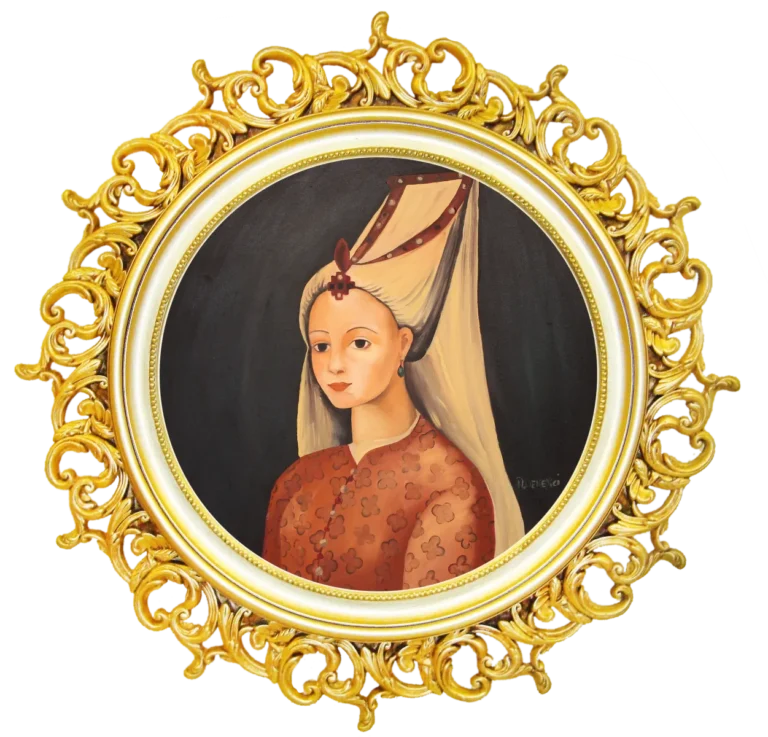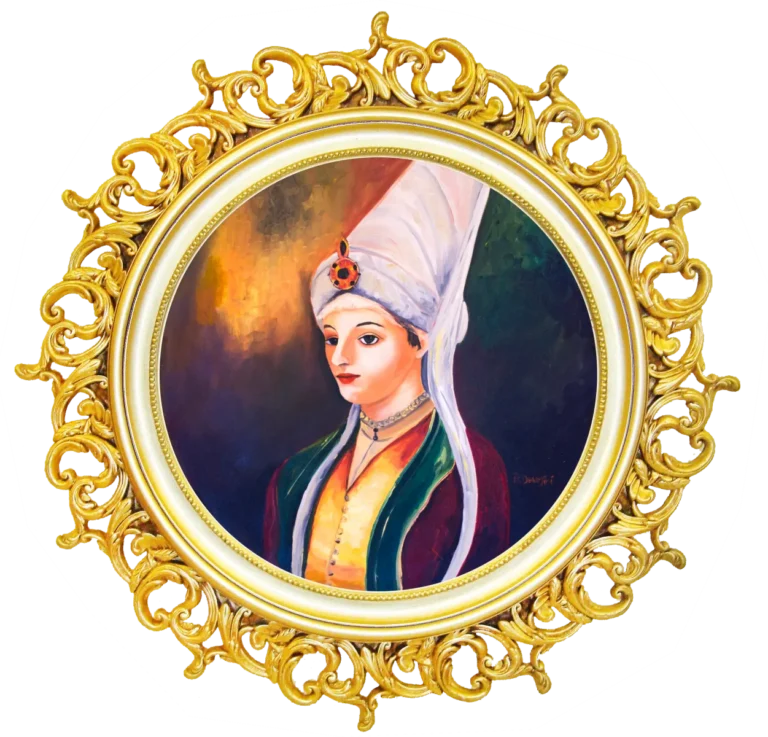


Mihrişah Sultan
It’s the afternoon of April 7, 1789. White-bright sunlight reflects off the waters of the Golden Horn painting them silver. The roses of the big rose bush, wilted from the heat, look as if they’re asleep. Sultan Mustapha III’s widow Mihrişah Sultana is lying down on the velvet sofa in the shade of an ornate canopy to while away the hours on this suffocating, remarkable day.
The blond odalisque is tirelessly fanning the Sultana with a peacock-feather fan. Tree branches, dressed in the early buds of spring, veil the pure blue of the cloudless sky like elegant lace. Suddenly a repeatedly explosive cannonade shakes the entire city of Istanbul. The shots are heralding the accession of her son Sultan Selim III to the throne of the Ottoman Empire.
A eunuch comes running excitedly to announce the momentous news: “My most worthy mistress, you are now a Valide Sultana. The Mother of the Sultan!” Mihrişah lets the book that she was holding slip off her fingers onto her knees. Her most fervent wish has finally come true after fifteen long years of waiting.
The Sultana, who is now forty five years old and still strikingly beautiful, will be returning to Topkapi Palace accompanied by the traditional retinue of a “Valide”. Her gilded coach, drawn by six white horses is saluted by the janissaries on Divanyolu as gold coins are distributed to the poor. When her coach has driven through the Gate of Happiness, the new monarch greets his mother by bending to the ground three times. He kisses her hand which she has offered from the window of her carriage.
Mihrişah Sultana commissioned a complex of public buildings in Eyüp at her own expense. In it there are an alms house, a school, a library, a fountain and a mausoleum, all bearing her name. She also built many fountains wherever in Istanbul they were needed.